 Rewards infrastructure for Africa
How to Communicate Employee Benefits So Your Team Actually Values Them
A great benefits programme that nobody knows about is indistinguishable from having no benefits at all. Here's the full communication playbook for African HR teams.
Abby Sotomiwa
Co-Founder & CEO, RibiRewards

How to Communicate Employee Benefits So Your Team Actually Values Them
A great benefits programme that nobody knows about is indistinguishable from having no benefits at all. Here's the communication playbook for African HR teams.
The Communication Gap Is Costing You
A consistent finding in African HR research: employees consistently underestimate the value of their benefits package. Ask employees to estimate the monthly value of their non-salary compensation, and the average estimate comes in 30–50% below the actual figure. That gap represents wasted investment — money spent on benefits that aren't being counted, valued, or contributing to the retention they're meant to drive. For more on this, see our piece on What Gen Z African Employees Actually Want From Their Benefits Package.
The Four Communication Moments That Matter
1. The Offer Letter
Candidates receive salary information prominently and benefits information in a paragraph at the bottom of the offer letter, if at all. This is a missed opportunity. Present the full benefits package — itemised, with estimated monthly values — as part of the offer. A candidate seeing "Total compensation package: ₦5.8M (salary ₦4.8M + benefits ₦1M)" receives a meaningfully different impression than one seeing "salary ₦4.8M."
2. Onboarding Week
The first week of employment is the highest-attention period in an employee's tenure. Benefits introduced during onboarding are remembered. Benefits mentioned in a handbook that gets skimmed are forgotten. Dedicate 30 minutes of onboarding to a live walkthrough of the benefits platform — show the new hire their wallet, explain the categories, and make their first redemption with them if possible.
3. Monthly Benefits Statements
Send every employee a monthly email or in-app notification showing: what benefits they have available, what they've used, and what's expiring. This regular communication keeps benefits top of mind and drives utilisation — especially in categories employees don't use habitually.
4. Annual Benefits Review
At least once per year, communicate any changes, additions, or enhancements to the benefits programme. Frame improvements as evidence of the company's ongoing investment in its people. This is a culture moment, not just an administrative update.
Channel Strategy for African Teams
- WhatsApp: The communication channel most African teams actually use. A dedicated benefits WhatsApp group (or integration into a team group) for reminders, tips, and announcements reaches people where they are.
- Email: For formal statements, policy communications, and monthly summaries. Works best when concise and visually clear.
- Slack / Teams: For companies with internal messaging platforms. A #benefits channel for tips, reminders, and employee-shared redemption stories builds social proof.
- All-hands meetings: Occasional benefits updates in all-hands normalise the topic and keep it visible at a cultural level.
Manager Activation
Train and empower managers to communicate benefits to their teams. A manager who mentions "have you used your meal credits this month?" in a one-on-one drives utilisation more effectively than any company-wide email. Managers who personally share that they've used a benefit — "I used the mental health sessions and it genuinely helped" — reduce stigma and drive adoption in high-value categories.
Making Benefits Part of Your Employer Brand
Communicate your benefits externally as well as internally. Your LinkedIn careers page, job postings, and recruitment conversations should include clear, specific benefits information. "We offer a structured benefits programme including health insurance top-ups, monthly meal allowances, and L&D credits" is more compelling than "competitive benefits package."
Related reading
Abby Sotomiwa
Co-Founder & CEO, RibiRewards
Building rewards and recognition infrastructure for African and diaspora markets.
Africa HR Insights
100 chart-driven data reports on employee rewards, recognition benchmarks, and year-end gifting across African markets — published weekly by RibiRewards.
Ready to start rewarding your team properly?
One dashboard, every African market, every reward type. Book a 20-minute call and we'll tailor the platform to your team.
 PRODUCT
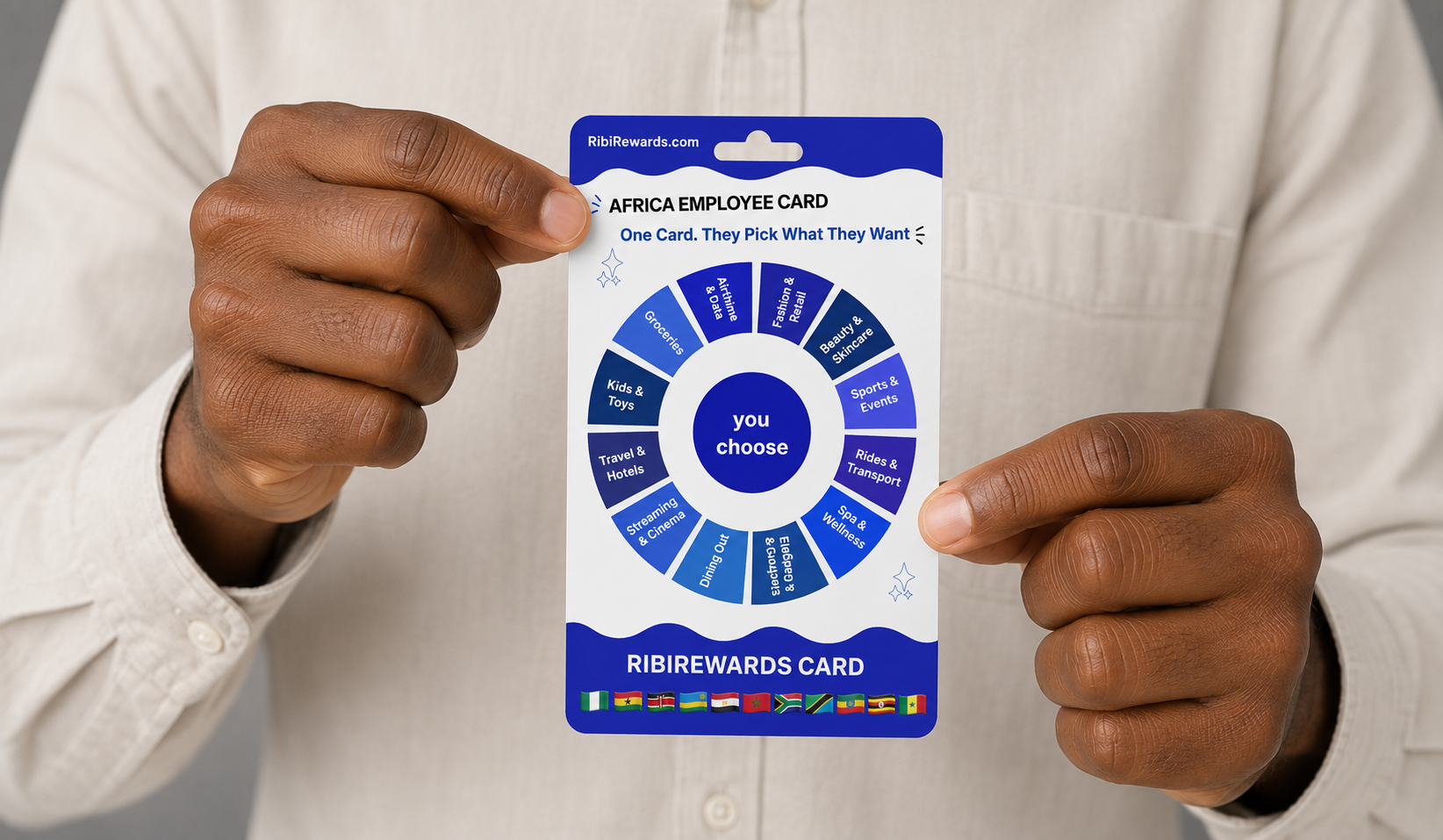
We Just Launched RewardsCard on Product Hunt
RewardsCard is Africa's rewards and gifting infrastructure in one card — HR teams send it, recipients pick what they actually want from a real catalogue, live across 29 countries. Here's why we built it, and where to find the launch.
 SEASONAL GIFTING
Why December Gifting Planning Should Start in August
Companies that lock in their December gifting plan months ahead get first pick of pricing, delivery slots and card designs. Here's why the scramble every December is avoidable — and what starting early actually looks like.
 CHOICE REWARDS
One Gift, Infinite Choices: Solving Multi-Country December Gifting
Sending the same fruit basket to a team spread across five countries isn't a gift plan. Here's how choice-based rewards let each person pick what actually matters to them, fulfilled properly in their own market.