 Rewards infrastructure for Africa
The Benefits Utilisation Problem: Why 60% of African Employee Benefits Go Unused (And How to Fix It)
You spent the budget but employees aren't using it. Here are the five reasons benefits go unclaimed — and the specific fixes that drive utilisation above 90%.
Abby Sotomiwa
Co-Founder & CEO, RibiRewards

The Benefits Utilisation Problem: Why 60% of African Employee Benefits Go Unused (And How to Fix It)
You spent the budget. You launched the programme. But your employees aren't using it. Here's why — and the specific fixes that drive utilisation above 90%.
The Utilisation Gap Is Real and Costly
Research across employee benefits programmes in Nigerian and Kenyan companies consistently finds the same problem: a significant portion of available benefits go unclaimed each month. Estimates vary, but utilisation rates of 40–60% are common for programmes without active management. That means you're paying for benefits that employees aren't receiving value from — the worst of both worlds. For more on this, see our piece on What Gen Z African Employees Actually Want From Their Benefits Package.
The consequences are more than financial. Low utilisation means the intended culture impact — the signal that the company cares — isn't being received. And unexplained budget wastage is a red flag for finance teams reviewing the HR spend line.
The Five Reasons Utilisation Fails
1. Employees Don't Know the Benefit Exists
Launched in an all-hands meeting twelve months ago and never mentioned again. Benefits that aren't consistently communicated become benefits that employees forget. Utilisation requires awareness — and awareness requires repetition.
2. The Redemption Process Is Too Complicated
If claiming a meal allowance requires submitting a form, waiting for approval, and chasing finance for reimbursement, employees will stop trying after one or two frustrating experiences. Friction kills utilisation. Benefits must be redeemable in one or two steps.
3. The Benefits Don't Match What Employees Actually Need
A gym credit for an employee who works night shifts and lives far from any partner gym. A restaurant voucher in a city where the partner network has two locations. Mismatched benefits create a category of entitlement without utility — the employee is "covered" but not actually served.
4. Credits Expire Before Employees Notice
Monthly credits that expire on the last day of the month, with no notification, result in regular forfeitures. Employees lose trust in the programme when they feel their allocated value is being quietly taken back.
5. No Nudges, No Reminders, No Habit Formation
Benefits utilisation is a habit. Habits require reinforcement. Without periodic reminders — "you have ₦8,000 in meal credits expiring in 5 days" — employees default to old behaviours and forget the benefit exists.
The Fixes That Work
- Digital wallet with real-time balance visibility: Employees who can see their balance instantly are more likely to use it.
- Automated expiry notifications: 7-day and 48-hour reminders drive last-minute utilisation before credits expire.
- One-click redemption: The fewer steps between benefit and value, the higher the utilisation rate.
- Monthly benefit statements: A monthly summary of what was used, what's available, and what's expiring keeps benefits top of mind.
- Manager communication role: Train managers to remind their teams about benefits — especially before credit expiry windows.
- Flexible allocation: Let employees shift unused credits between categories where possible — this reduces forfeitures and increases satisfaction.
Setting a Utilisation Target
Best-in-class employee benefits programmes target 85–95% monthly utilisation. Anything below 70% should trigger a review of communication, redemption experience, and benefit relevance. RibiRewards clients who follow the activation playbook consistently achieve utilisation above 80% within 90 days of launch.
Related reading
Abby Sotomiwa
Co-Founder & CEO, RibiRewards
Building rewards and recognition infrastructure for African and diaspora markets.
Africa HR Insights
100 chart-driven data reports on employee rewards, recognition benchmarks, and year-end gifting across African markets — published weekly by RibiRewards.
Ready to start rewarding your team properly?
One dashboard, every African market, every reward type. Book a 20-minute call and we'll tailor the platform to your team.
 PRODUCT
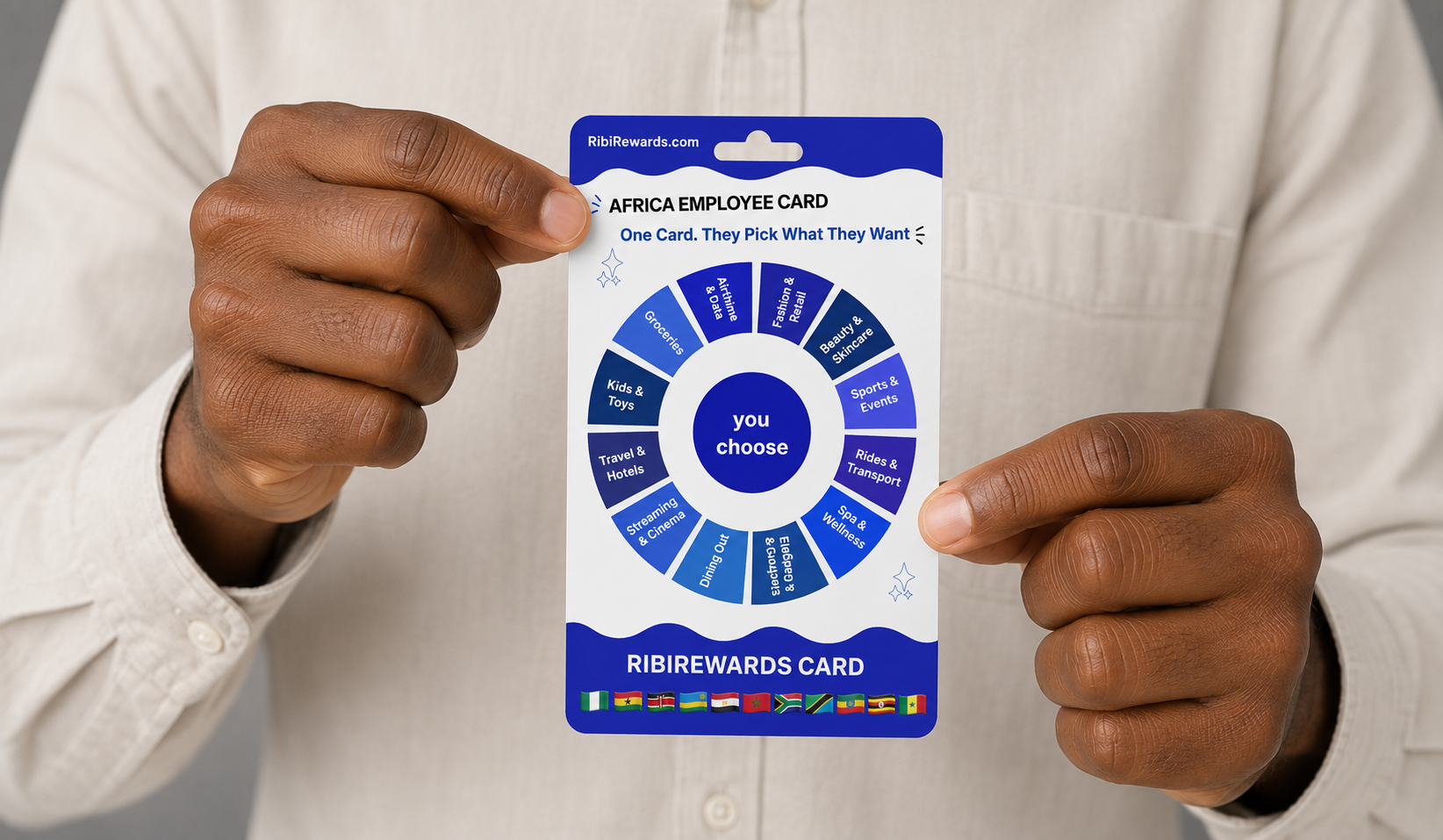
We Just Launched RewardsCard on Product Hunt
RewardsCard is Africa's rewards and gifting infrastructure in one card — HR teams send it, recipients pick what they actually want from a real catalogue, live across 29 countries. Here's why we built it, and where to find the launch.
 SEASONAL GIFTING
Why December Gifting Planning Should Start in August
Companies that lock in their December gifting plan months ahead get first pick of pricing, delivery slots and card designs. Here's why the scramble every December is avoidable — and what starting early actually looks like.
 CHOICE REWARDS
One Gift, Infinite Choices: Solving Multi-Country December Gifting
Sending the same fruit basket to a team spread across five countries isn't a gift plan. Here's how choice-based rewards let each person pick what actually matters to them, fulfilled properly in their own market.