 Rewards infrastructure for Africa
The True Cost of Manual Cross-Border Employee Recognition
Why the invoice-VAT-wire-issuance cycle for cross-border recognition takes weeks, and what a self-serve alternative actually removes.
Abby Sotomiwa
Co-Founder & CEO, RibiRewards
The True Cost of Manual Cross-Border Employee Recognition
The manual process most companies use to recognise African employees looks something like this: an invoice gets raised, someone corrects the VAT treatment, the payment goes out by wire or Stripe, and a card gets issued by hand once the payment clears. Every step is reasonable on its own. Stacked together, the process takes days to weeks per request — for a recognition moment that is supposed to feel immediate.
What the delay actually costs
The cost is not just administrative time. A birthday card that arrives two weeks late has lost the thing that made it a birthday card. The delay does not just slow down recognition, it quietly converts a meaningful gesture into an administrative afterthought — which is worse than not sending anything, because now the company has spent the effort and gotten none of the goodwill.
Where the manual process actually breaks down
Four points, consistently: the invoice cycle (waiting on approval and generation), VAT correction (getting the tax treatment right for the specific country), payment clearing (wire transfers in particular can take days), and manual issuance (someone has to actually generate and send the card once payment lands). Each step individually is a day or two. Stacked, they compound into weeks.
The self-serve alternative
A self-serve funding flow collapses this to three steps: add a recipient (single or bulk CSV), pay by card or wire, and the card issues automatically the moment payment clears — triggered by a webhook, not a person. The recipient gets their redemption code by email the same day, not the same month.
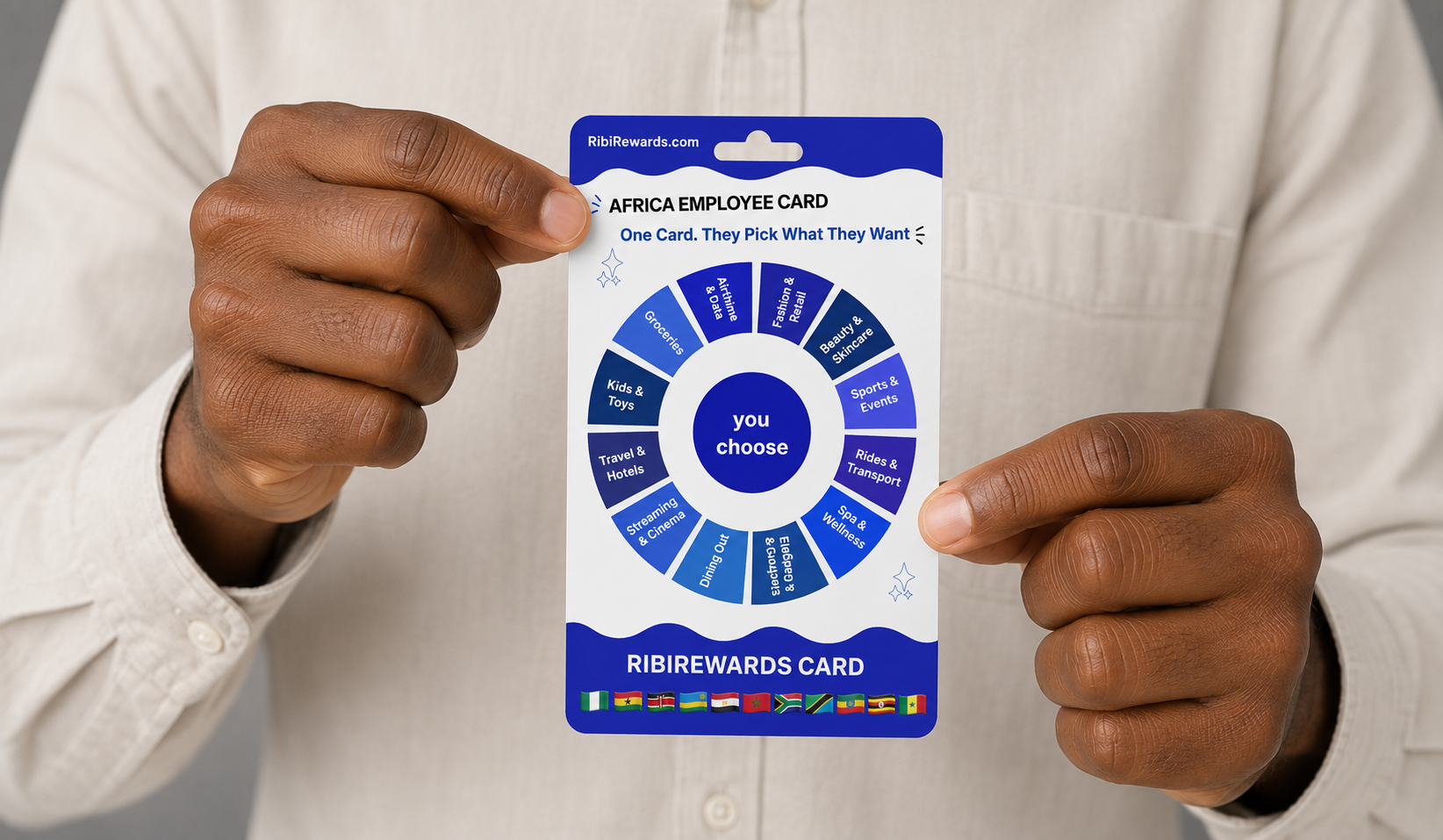
This is exactly the flow built for companies routing African recognition away from global platforms that were not built for local markets — see the Kudos comparison for the specific case, or RewardsCard for how the underlying product works.
Removing the manual process entirely
For companies sending recognition regularly rather than as one-off requests, the better fix is removing the manual trigger altogether. If your team runs on Deel Local Payroll, birthdays and anniversaries sync automatically and a suggested card appears on the calendar — no invoice cycle required at all, because the wallet is funded ahead of time rather than per-request.
Africa HR Insights
100 chart-driven data reports on employee rewards, recognition benchmarks, and year-end gifting across African markets — published weekly by RibiRewards.
Ready to start rewarding your team properly?
One dashboard, every African market, every reward type. Book a 20-minute call and we'll tailor the platform to your team.
 PRODUCT
We Just Launched RewardsCard on Product Hunt
RewardsCard is Africa's rewards and gifting infrastructure in one card — HR teams send it, recipients pick what they actually want from a real catalogue, live across 29 countries. Here's why we built it, and where to find the launch.
 SEASONAL GIFTING
Why December Gifting Planning Should Start in August
Companies that lock in their December gifting plan months ahead get first pick of pricing, delivery slots and card designs. Here's why the scramble every December is avoidable — and what starting early actually looks like.
 CHOICE REWARDS
One Gift, Infinite Choices: Solving Multi-Country December Gifting
Sending the same fruit basket to a team spread across five countries isn't a gift plan. Here's how choice-based rewards let each person pick what actually matters to them, fulfilled properly in their own market.