 Rewards infrastructure for Africa
What Gen Z African Employees Actually Want From Their Benefits Package
The youngest generation entering African workforces has different priorities. Here's what they want — and how to build a benefits programme that works for all generations.
Abby Sotomiwa
Co-Founder & CEO, RibiRewards

What Gen Z African Employees Actually Want From Their Benefits Package
The youngest generation entering African workforces has different priorities than their millennial managers. Here's what they want — and how to deliver it.
A Different Generation, Different Priorities
African Gen Z — those born between 1997 and 2012 — are entering the workforce with experiences and expectations shaped by economic instability, social media, global cultural connectivity, and a heightened awareness of mental health. They are not millennials with younger faces; they have genuinely different priorities when it comes to work and workplace benefits.
Companies that treat all employees as a homogeneous group when designing benefits programmes will underserve their youngest workers — and underserve the future of their organisations.
What Gen Z Prioritises — And Why
Mental Health Support
Gen Z are the first generation to have grown up with mental health as an open conversation topic — on social media, among peers, in popular culture. They are more likely to acknowledge mental health challenges and more likely to expect employer support. Therapy vouchers, mental health days, and wellness resources are not soft benefits to this demographic — they're essentials.
Learning and Growth
Gen Z employees have grown up with free access to unlimited learning content on YouTube, podcasts, and online platforms. They have self-selected into a habit of continuous learning. L&D benefits that provide access to structured, credentialled courses and certifications take this habit and formalise it — creating a benefit that feels genuinely aligned with how they already operate.
Flexibility and Lifestyle
Remote work, flexible hours, and lifestyle benefits — entertainment credits, leisure allowances — resonate strongly with Gen Z's prioritisation of work-life integration. Benefits that support their life outside of work (not just their productivity within it) signal that the company sees them as complete people.
Financial Wellness
Having entered the workforce during periods of significant inflation and economic uncertainty, African Gen Z employees are acutely financially aware. Benefits that directly offset daily financial pressure — meal allowances, transport credits, grocery top-ups — are deeply practical and appreciated by a generation managing significant economic headwinds.
What Gen Z Is Less Moved By
Traditional prestige markers — the corner office, the company car, the annual dinner — land less strongly with Gen Z than with previous generations. They're more interested in daily life quality than status symbols, and more interested in growth trajectory than job titles. Benefits that support daily life and personal development will consistently outperform status-oriented perks for this demographic.
Communication Style Matters Too
Gen Z employees expect digital-native benefits delivery — an app or web dashboard with real-time balance visibility, instant redemption, and clear communication. Benefits that require phone calls, paper forms, or approval chains feel archaic. The user experience of your benefits platform is part of the benefit itself.
Building a Multi-Generational Benefits Programme
Most African companies now employ three or four generational cohorts simultaneously. A well-designed flexible benefits programme accommodates all of them: a 45-year-old manager might prioritise school fees and health insurance; a 24-year-old engineer might prioritise mental health and L&D. Flexibility is the architecture that makes one programme serve all cohorts effectively.
Related reading
- Why African Employees Are Choosing Benefits Over Bonuses in 2026
- Why 78% of African Professionals Say Benefits Influence Their Job Decisions
- The Complete Guide to Employee Benefits in Nigeria (2026 Edition)
- The Benefits Utilisation Problem: Why 60% of African Employee Benefits Go Unused (And How to Fix It)
Abby Sotomiwa
Co-Founder & CEO, RibiRewards
Building rewards and recognition infrastructure for African and diaspora markets.
Africa HR Insights
100 chart-driven data reports on employee rewards, recognition benchmarks, and year-end gifting across African markets — published weekly by RibiRewards.
Ready to start rewarding your team properly?
One dashboard, every African market, every reward type. Book a 20-minute call and we'll tailor the platform to your team.
 PRODUCT
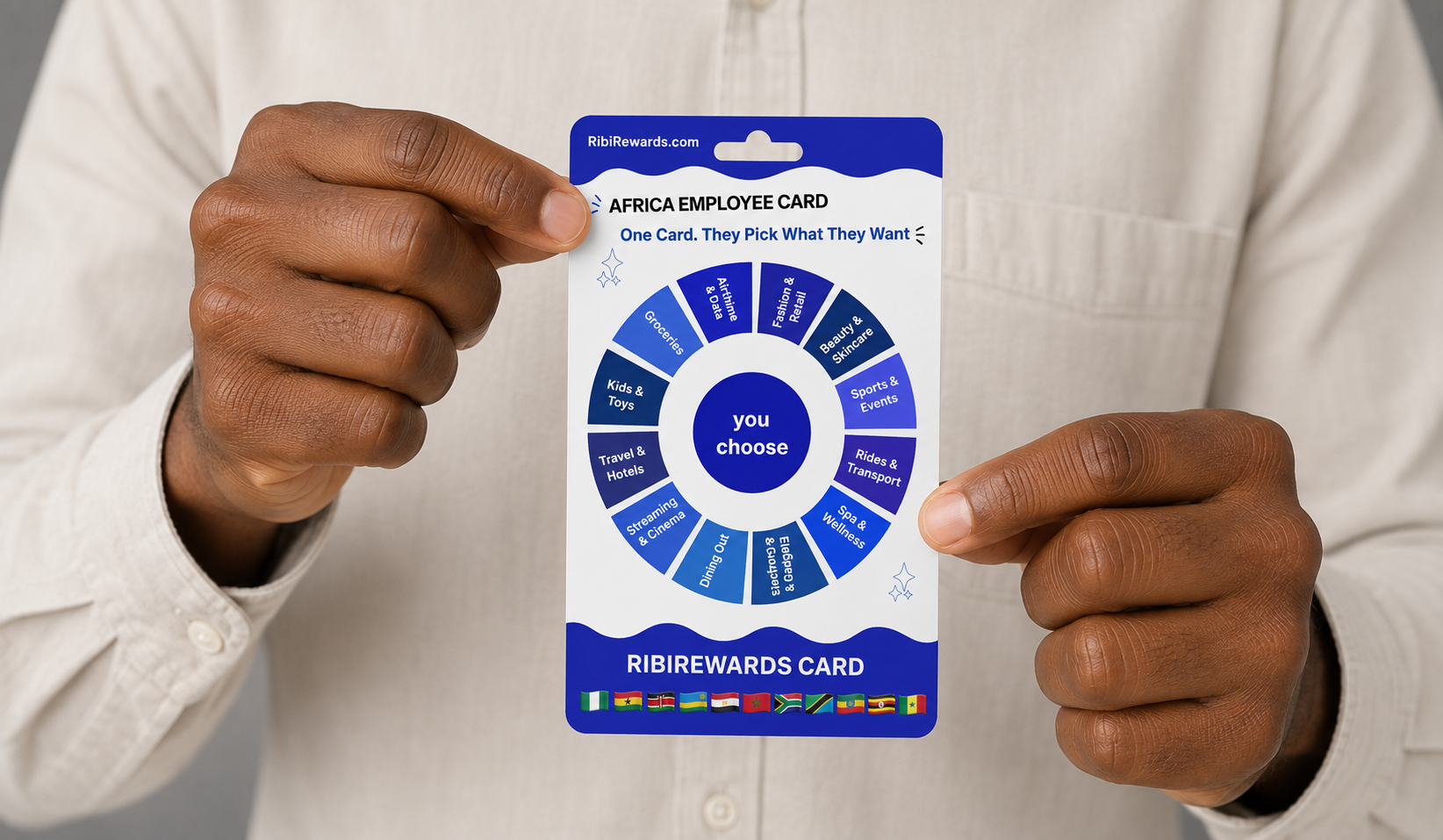
We Just Launched RewardsCard on Product Hunt
RewardsCard is Africa's rewards and gifting infrastructure in one card — HR teams send it, recipients pick what they actually want from a real catalogue, live across 29 countries. Here's why we built it, and where to find the launch.
 SEASONAL GIFTING
Why December Gifting Planning Should Start in August
Companies that lock in their December gifting plan months ahead get first pick of pricing, delivery slots and card designs. Here's why the scramble every December is avoidable — and what starting early actually looks like.
 CHOICE REWARDS
One Gift, Infinite Choices: Solving Multi-Country December Gifting
Sending the same fruit basket to a team spread across five countries isn't a gift plan. Here's how choice-based rewards let each person pick what actually matters to them, fulfilled properly in their own market.