 Rewards infrastructure for Africa
Why African Employees Are Choosing Benefits Over Bonuses in 2026
The shift from cash rewards to structured employee benefits is accelerating across Nigeria, Kenya, Ghana, and South Africa — and the data tells a clear story.
Abby Sotomiwa
Co-Founder & CEO, RibiRewards

Why African Employees Are Choosing Benefits Over Bonuses in 2026
The shift from cash rewards to structured employee benefits is accelerating across Nigeria, Kenya, Ghana, and South Africa — and the data tells a clear story.
The Bonus Isn't Dead. But It's Not Enough.
For decades, the year-end bonus was the centrepiece of employee compensation in African companies. A lump sum paid in December, celebrated loudly, and forgotten by February. The model worked when the workforce was smaller, salaries were lower, and expectations were more uniform.
In 2026, that model is under serious pressure. Inflation across major African economies has eroded the real value of flat bonuses. The cost of living in Lagos, Nairobi, and Accra has risen faster than most salary adjustments. Employees are doing the maths — and they're asking for something more consistent, more tangible, and more integrated into their daily lives.
What the Research Shows
A 2025 survey of over 2,000 employees across Nigeria, Kenya, and Ghana found that structured employee benefits — meal allowances, health top-ups, transport credits, and learning stipends — ranked higher than cash bonuses when employees were asked what would most improve their working life. The margin wasn't small. Benefits beat bonuses by nearly two to one.
The reasons are intuitive when you think about them. A ₦50,000 bonus disappears into a rent payment or family obligation. A ₦10,000 monthly meal credit is felt every working day. The psychological impact of daily, consistent support is fundamentally different from the impact of an annual lump sum.
Three Drivers of the Benefits Shift
1. Inflation Has Made Daily Costs the Priority
With food costs, transport, and data bundles consuming larger shares of take-home pay, employees want support with daily expenses — not a savings injection they receive once a year. Meal and transport benefits directly offset the pressures that employees feel on a Tuesday afternoon, not just in December.
2. The Rise of the African Dual-Income Household
More African households now have two working adults managing complex financial lives — school fees, aging parents, investment commitments, and personal aspirations. Benefits that support family and lifestyle decisions — childcare contributions, grocery allowances, health top-ups — resonate far more deeply with this reality than a standalone cash payment.
3. Benefits Signal Ongoing Investment, Not Transactional Exchange
There is a cultural and psychological difference between a company that pays a bonus and a company that provides ongoing benefits. One feels transactional. The other feels like a partnership. The most talent-competitive African companies understand this distinction and are building benefits programmes accordingly. For more on this, see our piece on Why 78% of African Professionals Say Benefits Influence Their Job Decisions.
What This Means for HR Leaders
The shift doesn't mean you eliminate bonuses. It means you build a foundation of structured, consistent benefits — and use bonuses on top of that foundation as genuine performance recognition. The combination is more powerful than either alone.
The practical challenge for most African HR teams has been the operational complexity of managing benefits. Sourcing vendors, tracking spend, handling delivery failures, managing multiple supplier relationships — it adds up fast. This is precisely the infrastructure gap that RibiRewards was built to close.
The Platform Advantage
When employee benefits are managed through a unified platform rather than patchwork vendor arrangements, the HR team's administrative burden drops sharply. Employees get a consistent experience. Spend is visible and reportable. And the benefit itself — the daily, tangible value — lands exactly as intended.
In a competitive talent market, that consistency is a meaningful differentiator. Companies that have built structured benefits programmes in 2025 are already seeing the returns in retention, engagement scores, and offer acceptance rates.
Where to Start
If you're moving from a bonus-first to a benefits-first culture, start with the highest-impact categories for your team's specific context. For most African companies, meal allowances and transport credits deliver the fastest visible impact — employees feel them immediately. Layer in health, L&D, and lifestyle benefits as your programme matures. For more on this, see our piece on What Gen Z African Employees Actually Want From Their Benefits Package.
The companies winning the talent war in Africa right now are not necessarily paying the highest salaries. They're offering the most thoughtful, consistent, and life-relevant benefits packages. That's a race worth entering.
Related reading
- Why 78% of African Professionals Say Benefits Influence Their Job Decisions
- What Gen Z African Employees Actually Want From Their Benefits Package
- The Complete Guide to Employee Benefits in Nigeria (2026 Edition)
- The Benefits Utilisation Problem: Why 60% of African Employee Benefits Go Unused (And How to Fix It)
Abby Sotomiwa
Co-Founder & CEO, RibiRewards
Building rewards and recognition infrastructure for African and diaspora markets.
Africa HR Insights
100 chart-driven data reports on employee rewards, recognition benchmarks, and year-end gifting across African markets — published weekly by RibiRewards.
Ready to start rewarding your team properly?
One dashboard, every African market, every reward type. Book a 20-minute call and we'll tailor the platform to your team.
 PRODUCT
We Just Launched RewardsCard on Product Hunt
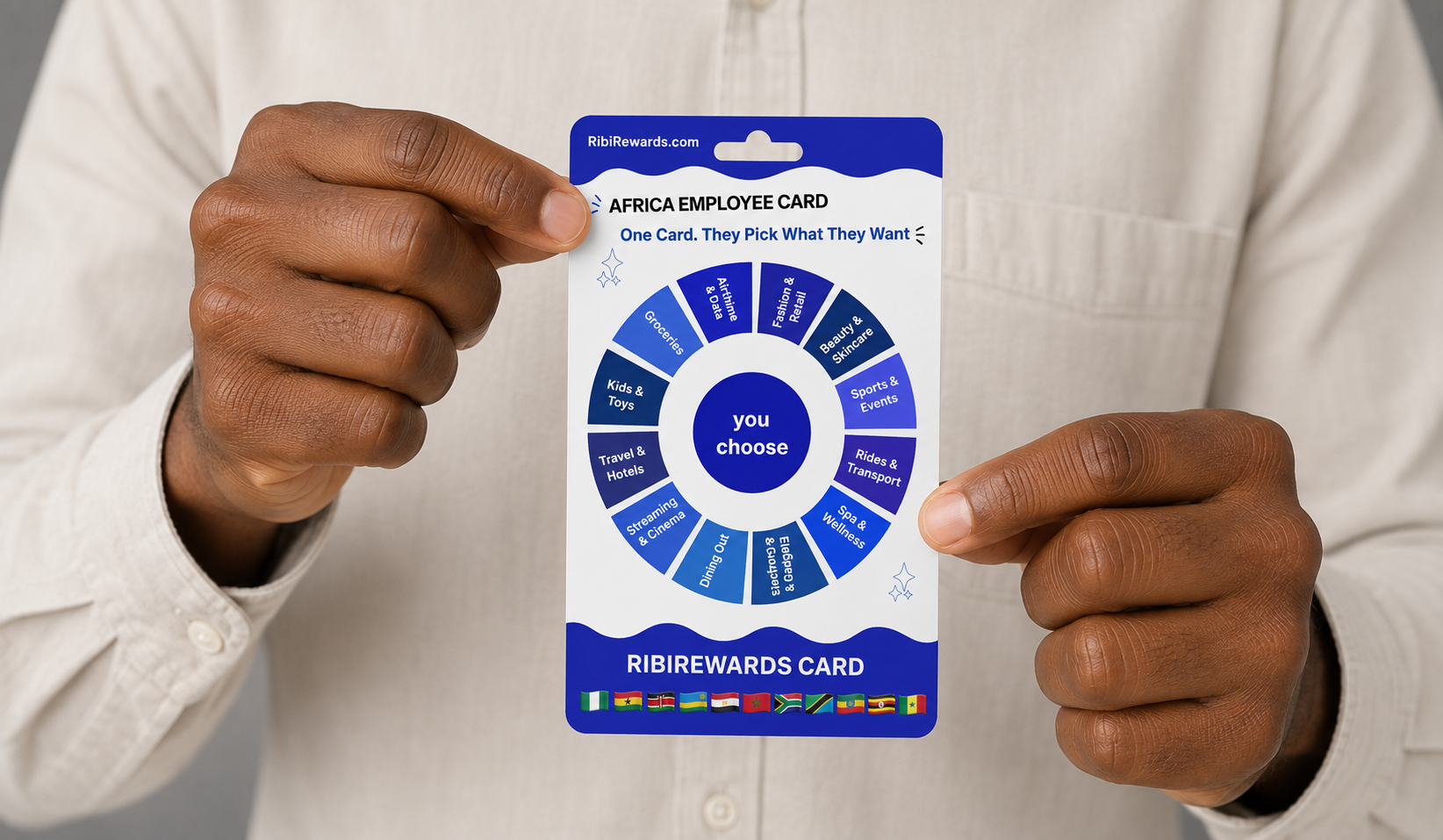
RewardsCard is Africa's rewards and gifting infrastructure in one card — HR teams send it, recipients pick what they actually want from a real catalogue, live across 29 countries. Here's why we built it, and where to find the launch.
 SEASONAL GIFTING
Why December Gifting Planning Should Start in August
Companies that lock in their December gifting plan months ahead get first pick of pricing, delivery slots and card designs. Here's why the scramble every December is avoidable — and what starting early actually looks like.
 CHOICE REWARDS
One Gift, Infinite Choices: Solving Multi-Country December Gifting
Sending the same fruit basket to a team spread across five countries isn't a gift plan. Here's how choice-based rewards let each person pick what actually matters to them, fulfilled properly in their own market.