 Rewards infrastructure for Africa
Why Global Recognition Platforms Don't Reach Africa
The structural reason global HR recognition tools consistently fall short for African markets, and what actually closes the gap.
Abby Sotomiwa
Co-Founder & CEO, RibiRewards
Why Global Recognition Platforms Don't Reach Africa
Every global HR recognition platform faces the same structural problem when a customer's headcount includes African markets: the catalogue and the pricing were built around one economic reality, and Africa is a genuinely different one. This is not a criticism of any specific platform's engineering — it is what happens when "global" means "everywhere the platform's home market already has retail partnerships."
It's a distribution problem, not a product problem
Building a genuinely local catalogue in 13 African markets — real brands, real redemption infrastructure, real local pricing — is not something a platform adds as a feature. It requires local partnerships, local currency settlement, and local compliance in every market, market by market. Most global platforms reasonably choose not to build this, because their core customer base does not need it.
The gap only becomes visible once a company with global recognition software actually has staff in Lagos, Nairobi, or Accra — at which point the platform's global reach quietly stops being global.
What "reaching Africa" actually requires
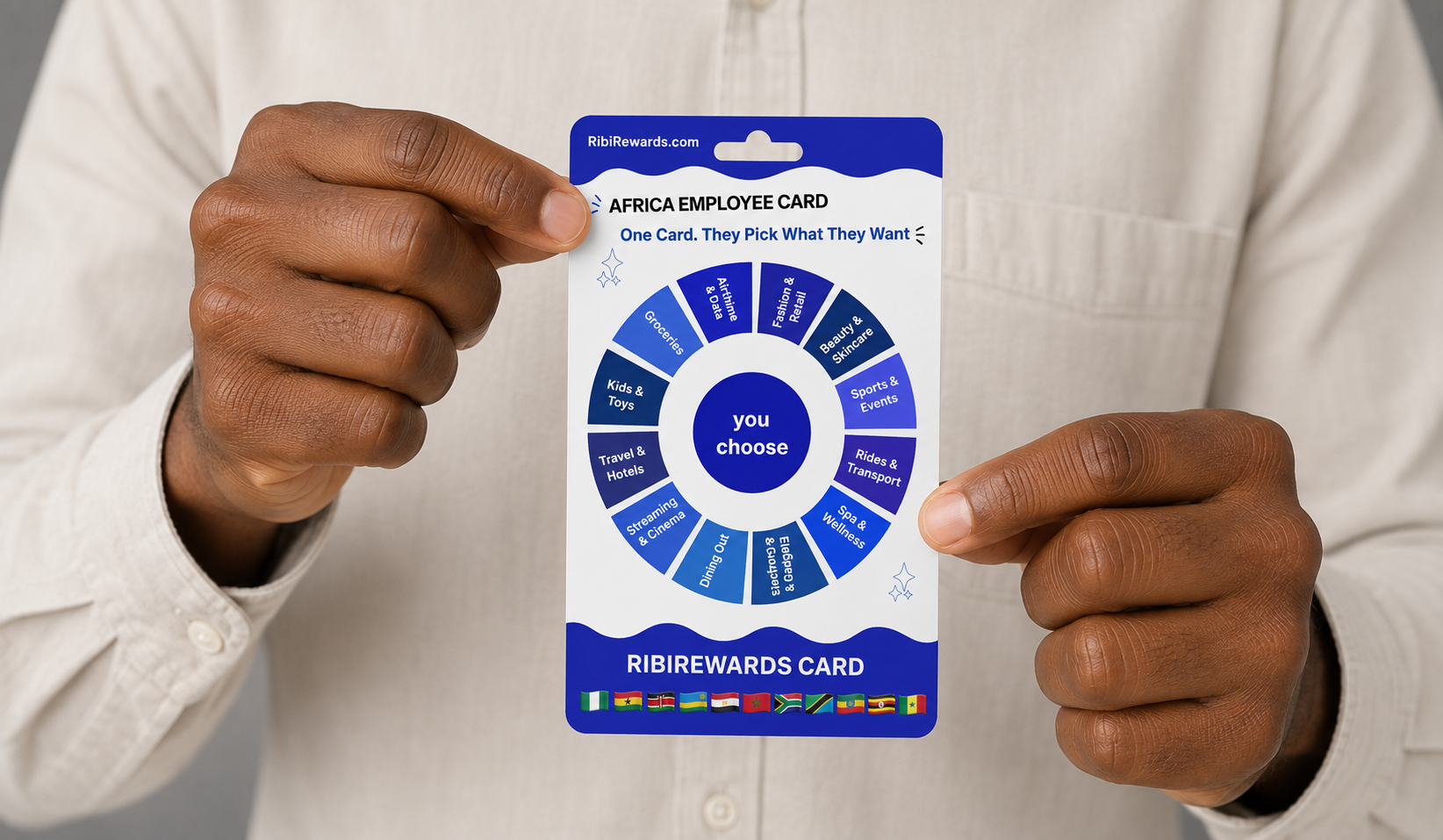
Three things, in practice: pricing set in local currency rather than converted from a global rate, redemption brands the recipient actually recognises and shops at, and fulfilment that does not depend on cross-border shipping or a foreign billing address clearing. A RewardsCard is built around exactly this — local from the pricing screen through to redemption.
A common pattern among companies with global tools
Companies using platforms like Kudos, Workhuman, Bonusly, or Achievers for global recognition typically keep that tool for the markets it was built for, and route African-based recognition through infrastructure built specifically for African markets — often triggered by the same payroll data via an integration like Deel Local Payroll, so nobody in HR is maintaining two separate systems by hand.
See the direct Kudos comparison, Workhuman comparison, or Bonusly comparison for how this specifically plays out, or explore BenefitsCard if the gap is recurring monthly benefits rather than one-off recognition moments.
The honest tradeoff
Running two systems side by side is real overhead, and it is not the answer for every company. For a business with a handful of African employees inside a much larger global headcount, it may genuinely be simpler to accept the catalogue gap. The split becomes worth making once the African headcount is large enough that "nothing local to redeem" is a recurring complaint rather than an edge case.
Africa HR Insights
100 chart-driven data reports on employee rewards, recognition benchmarks, and year-end gifting across African markets — published weekly by RibiRewards.
Ready to start rewarding your team properly?
One dashboard, every African market, every reward type. Book a 20-minute call and we'll tailor the platform to your team.
 PRODUCT
We Just Launched RewardsCard on Product Hunt
RewardsCard is Africa's rewards and gifting infrastructure in one card — HR teams send it, recipients pick what they actually want from a real catalogue, live across 29 countries. Here's why we built it, and where to find the launch.
 SEASONAL GIFTING
Why December Gifting Planning Should Start in August
Companies that lock in their December gifting plan months ahead get first pick of pricing, delivery slots and card designs. Here's why the scramble every December is avoidable — and what starting early actually looks like.
 CHOICE REWARDS
One Gift, Infinite Choices: Solving Multi-Country December Gifting
Sending the same fruit basket to a team spread across five countries isn't a gift plan. Here's how choice-based rewards let each person pick what actually matters to them, fulfilled properly in their own market.