 Rewards infrastructure for Africa
Health Benefits in Africa: Why HMO Top-Ups Are the Most Powerful Retention Tool You're Not Using
Healthcare anxiety is one of the leading sources of financial stress for African employees. Here's how smart HR teams use health benefits to build deep, lasting loyalty.
Abby Sotomiwa
Co-Founder & CEO, RibiRewards

Health Benefits in Africa: Why HMO Top-Ups Are the Most Powerful Retention Tool You're Not Using
Healthcare anxiety is one of the leading sources of financial stress for African employees. Here's how smart HR teams are using health benefits to build unbreakable loyalty. For more on this, see our piece on Mental Health Benefits Are No Longer Optional for African Companies. Here's Why — and How to Start..
The Healthcare Anxiety Problem
Healthcare is the single largest source of financial anxiety for most African employees. Not housing. Not food. Healthcare. Because the cost of a serious illness — for themselves or a family member — can be catastrophic in a system where out-of-pocket costs are high and insurance coverage is often inadequate.
This anxiety doesn't stay at home when people come to work. It sits in the background of every working day, consuming mental bandwidth, reducing focus, and creating a low-level dread that no salary increase fully resolves. Companies that address this anxiety directly build a different kind of loyalty — one rooted in genuine gratitude and trust.
What Good Health Benefits Look Like in an African Context
Standard group HMO coverage, while valuable, often has significant gaps. Optical care, dental treatment, mental health services, and specialist consultations frequently fall outside basic plan coverage. Employees discover these gaps at the worst possible moment — when they're already unwell and stressed.
The most effective health benefit programmes layer HMO top-up contributions on top of existing group coverage to fill these gaps. Add a gym credit and a mental health session voucher, and you've created a genuinely holistic package that addresses physical and psychological wellbeing simultaneously.
The Mental Health Dimension
Mental health is emerging as a critical frontier in African workplace benefits. The stigma is reducing — particularly among younger, urban professionals — and demand for accessible, affordable therapy is growing faster than supply. Companies that provide mental health session vouchers as part of their benefits package are seen as forward-thinking employers who understand what their people actually need.
Several African mental health platforms have emerged to serve this need: Uzima in Kenya, Relieve in Nigeria, and international platforms with African-based therapists. Including access to these platforms in your benefits package is both impactful and relatively affordable.
Gym Access: More Than Just Fitness
Gym and fitness credits serve double duty: they support physical health directly, and they provide a valuable stress-release valve. In high-pressure work environments — tech companies, financial services, consulting — access to physical activity is a meaningful wellbeing investment. Utilisation tends to be lower than meal benefits, but the employees who use it are disproportionately your highest performers.
How to Structure a Health Benefits Package
- Foundation: Group HMO coverage (meet legal minimums, then go beyond them)
- Enhancement: Monthly HMO top-up contribution of ₦5,000–₦15,000 or KES 2,000–5,000
- Wellness: Gym credit of ₦3,000–₦10,000 per month or equivalent
- Mental health: 1–2 therapy sessions per month via vetted platforms
- Optical/dental: Annual allowance for glasses, check-ups, and dental treatment
The ROI Case for Health Benefits
Health benefits reduce sick days, reduce presenteeism (the cost of employees being at work but not fully functional), and reduce attrition. The combined financial impact is substantial. A team member who leaves costs between 50% and 200% of their annual salary to replace — factoring in recruitment, onboarding, and productivity loss. If health benefits retain even a fraction of your team for an additional year, the investment pays for itself many times over.
Related reading
- Transport Benefits in African Cities: How to Take the Commute Burden Off Your Team
- School Fees, Childcare, and Family Benefits: The African Employee Benefit That Creates the Deepest Loyalty
- Mental Health Benefits Are No Longer Optional for African Companies. Here's Why — and How to Start.
- Meal Allowances, Transport, and Wellness: The Everyday Benefits African Employees Value Most
Abby Sotomiwa
Co-Founder & CEO, RibiRewards
Building rewards and recognition infrastructure for African and diaspora markets.
Africa HR Insights
100 chart-driven data reports on employee rewards, recognition benchmarks, and year-end gifting across African markets — published weekly by RibiRewards.
Ready to start rewarding your team properly?
One dashboard, every African market, every reward type. Book a 20-minute call and we'll tailor the platform to your team.
 PRODUCT
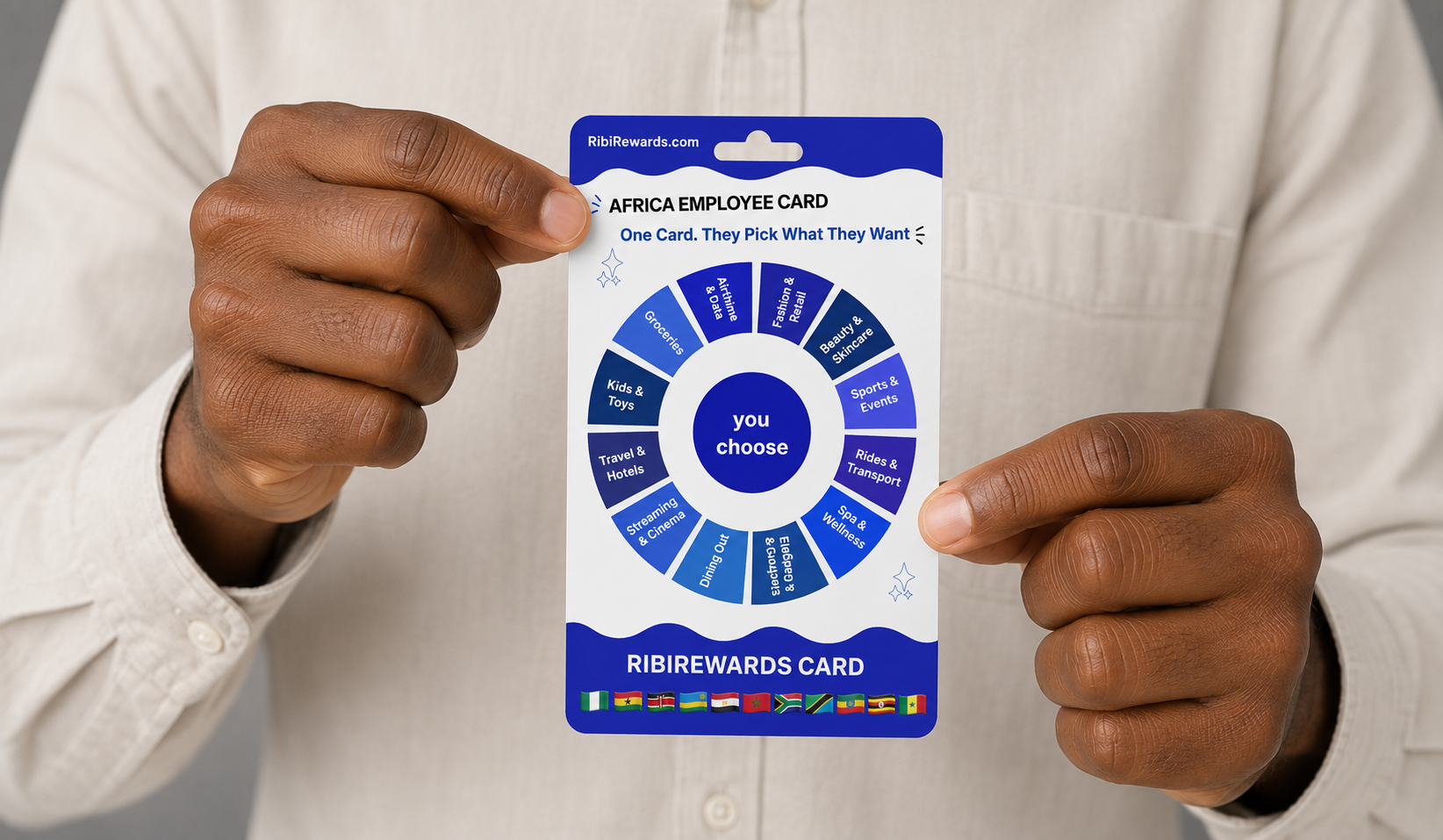
We Just Launched RewardsCard on Product Hunt
RewardsCard is Africa's rewards and gifting infrastructure in one card — HR teams send it, recipients pick what they actually want from a real catalogue, live across 29 countries. Here's why we built it, and where to find the launch.
 SEASONAL GIFTING
Why December Gifting Planning Should Start in August
Companies that lock in their December gifting plan months ahead get first pick of pricing, delivery slots and card designs. Here's why the scramble every December is avoidable — and what starting early actually looks like.
 CHOICE REWARDS
One Gift, Infinite Choices: Solving Multi-Country December Gifting
Sending the same fruit basket to a team spread across five countries isn't a gift plan. Here's how choice-based rewards let each person pick what actually matters to them, fulfilled properly in their own market.